
- New


The Nakabayashi Logical Prime A5 Ruled Notebook features 6 mm Logical ruling with dotted guides and smooth 75 gsm paper for organised notes and lists. It contains 40 sheets, equivalent to 80 pages, in a 148 × 210 mm A5 format. A navy blue cover, thread stitching and a cloth-covered spine make this a slim notebook for work, study or everyday writing.
The Nakabayashi Logical Prime A5 Ruled Notebook pairs a compact format with ruling that does more than provide a baseline. Dotted guides help you keep handwriting, lists and small diagrams aligned, making it a useful everyday notebook for work, study or personal notes. Use it for a single project or let it become a record of your day.
A navy blue kraft board cover with gold lettering and a black spine gives the notebook a restrained appearance. Thread stitching and a cloth-covered spine hold the pages together without a spiral. Its slim 4 mm profile slips alongside papers in your bag, while the A5 format provides a practical balance between writing space and portability.
The main horizontal lines are 6 mm apart, with two dotted guides dividing each row into three bands. Vertical reference points help you align indents, list entries and table columns. Follow the guides to keep letter height consistent, or use them to set aside a narrow area for comments alongside your main notes.
Smooth 75 gsm paper is designed to limit feathering and show-through. The green page layout includes a generous heading area, a date field and markers for dividing the page into two, three or four sections. Try separating observations from questions and next steps, so that you can return to a topic without searching through an uninterrupted block of text.
One Nakabayashi Logical Prime A5 ruled notebook, reference A513B. (Photographs are for illustration; colours may differ slightly from the actual product.)
Does 6 mm refer to the spacing between the dots? No. It is the distance between the main horizontal lines. The smaller dotted guides provide extra alignment references; this is a ruled notebook, not a dot-grid notebook.
How can I use it for vocabulary practice? Use the division markers to create columns for a word, its meaning and an example sentence. Keeping your own topic index at the front can also make entries easier to find later.
Nakabayashi's story began in Osaka in 1923 with a workshop that bound magazines and repaired books. Diary production followed in 1959, then Fueru photo albums in 1968, extending the company's work from published texts to personal records and photographs. These milestones share a practical purpose: bringing loose information together and keeping it available to revisit, whether it belongs in a library, a diary or a family album.
"Give your ideas a place, one line at a time."



LIFE Stationery

Kokuyo Kadokeshi Mini Blue & White 2 Color Set Eraser with a unique 18-edge design for precise erasing. Compact, PVC-free and ideal for technical drawing, writing and detailed corrections.
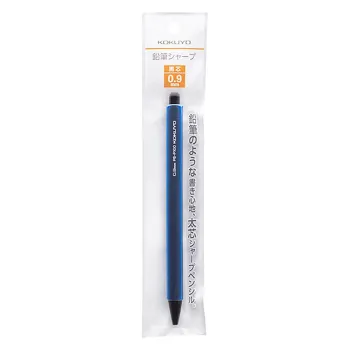
Kokuyo mechanical pencil with 0.9mm lead and navy blue body. Ideal for daily writing, sketching and technical drawing. Ergonomic, sturdy and made in Japan.

The MIDORI A5 Color Dot Grid Blue Notebook combines a muted blue cover with 56 matching blue pages and a subtle 5 mm dot grid. Its saddle-stitched binding and slim 3 mm profile make it a lightweight choice for notes, planning, bullet journaling, illustrations, photographs and stickers. Made in Japan.

MIDORI A5 Color Dot Grid Green Notebook pairs a muted green cover with 56 matching pages and a 5 mm dot grid. Its slim saddle stitch binding and rounded corners make it useful for project notes, study plans, sketches, travel records, stickers and photo layouts. Made in Japan.

Sailor Inktraveler Naoshima Kon 50 ml Fountain Pen Ink was the first ink developed by Sailor in collaboration with a European company. Inspired by the evening sky above Japan's Seto Inland Sea, it offers an elegant deep blue colour with beautiful shading and a smooth writing experience ideal for everyday use.

The Nakabayashi Logical Prime A5 Ruled Notebook features 6 mm Logical ruling with dotted guides and smooth 75 gsm paper for organised notes and lists. It contains 40 sheets, equivalent to 80 pages, in a 148 × 210 mm A5 format. A navy blue cover, thread stitching and a cloth-covered spine make this a slim notebook for work, study or everyday writing.