
- New


The Teranishi Guitar Light Blue Glass Dip Pen is a handmade glass pen for writing, drawing and sampling bottled inks. Every pen has its own unique pattern: the balance of light blue and gold-toned sparkle varies, with golden highlights more prominent in some pieces. Dip the grooved nib into ink and rinse it with water when changing colours. Photographs are illustrative: the pattern and balance of colours on your pen may differ from those shown.
The Teranishi Guitar Light Blue Glass Dip Pen pairs translucent blue glass with warm, gold-toned sparkle. Handmade and used directly with bottled ink, it offers a straightforward way to explore different colours without a filling mechanism. It is a practical choice for first-time glass pen users, ink collectors preparing swatches, and anyone who enjoys handwritten letters, journaling or drawing.
Light Blue describes the colour variation rather than a uniform finish. Translucent areas reveal the blue beneath the sparkling decoration, and the golden highlights can be more prominent than the blue itself in some pieces. Their appearance shifts with the lighting and viewing angle, giving the glass a warmer character than the colour name alone might suggest.
The handmade construction means that colour placement, decorative patterns and proportions vary between pens. A fuller section near the nib contrasts with the slender body, while the clear glass reveals the writing grooves and the ink held along them.
The glass nib has spiral grooves that collect ink and release it as you write. Dip the nib lightly into the bottle and remove any excess before touching the paper. Hold it at a gentle angle and rotate it slightly as the line begins to fade; this brings ink from another part of the nib into use before the next dip.
The pen accepts water-based dye, pigment and shimmer inks. Easy rinsing makes it useful for comparing colours without emptying and cleaning a fountain pen between samples. One option is Teranishi FUJIYAMA IRODORI San Blue 12 ml Fountain Pen Ink, although you can also explore other compatible inks from your collection.
Rinse the nib with water after use and dry it carefully with a clean, soft cloth. A fine, soft-bristled brush can help remove particles left in the grooves. Before moving to a different ink, remove the remaining water so it does not dilute the next colour.
The pen is made from hard glass, but its tip still needs careful handling. Avoid contact with the rim or bottom of the ink bottle, use a light touch on the page, and store the pen with its nib protected after cleaning.
Inktraveler supplies the pen in an open black cardboard tray with a white cushioning insert, enclosed in a plastic sleeve with a Japanese label on the back. The presentation includes one pen and a small nib protector. (Photographs are illustrative: the distribution of blue, the prominence of golden highlights and the proportions may differ from the photographed example because each pen is handmade).
Does it need cartridges or a converter? No. This is a dip pen: ink is held in the nib grooves rather than an internal reservoir. You only need a compatible bottle of ink.
Does Light Blue mean that it only writes in blue? No. Light Blue refers to the pen's body colour. The colour on the page is determined by the ink you choose.
How much can I write with one dip? There is no fixed writing capacity. It depends on the ink, paper, amount collected and writing style. Dip the nib again when the line starts to lose continuity.
Can I use shimmer inks? Yes, water-based inks containing shimmer particles are suitable. Clean the nib after each session and check the grooves for residue before storing it or changing colours.
Is it suitable for someone new to glass pens? Its simple operation lets you start without learning a filling system. Use light pressure, keep water nearby for rinsing, and prepare a safe surface on which to rest the pen.
Teranishi takes its name from its founder, Choichi Teranishi. After three years learning ink manufacture, he established the Osaka workshop that became Teranishi Chemical Industry in April 1916. Early products included writing inks and crayons, at a time when fountain pens were becoming more widespread and many writing materials were still imported.
The company worked to develop Japanese inks and art materials that could compete with imported products on quality. As the business expanded into overseas markets, colour, writing and artistic expression remained central to its work.
Guitar is Teranishi Chemical's historic trade name and emblem. It became the established identity for the company's export products in 1931 and was adopted across the domestic market after the war. Its precise origin is uncertain: the company preserves both a connection with the popularity of guitars in the Philippines and an association between the colours of art and musical notes.
The earliest emblem showed Benzaiten holding a biwa, a traditional Japanese instrument. A later version depicted a queen with a guitar, before the design evolved into the symbol combining a crown, a musical note and the six letters of GUITAR. This connection between music and colour remains part of the brand's visual identity.
The company's facilities were destroyed during the bombing of Osaka in 1945, but production resumed in February 1946. In 1953 it developed Magic Ink, described by the company as Japan's first domestically manufactured oil-based marking pen. Its glass pens belong to this wider history of finding different ways to bring ink and colour into everyday life.
“Between the light in the glass and the colour of the ink, every word finds its place.”


The G.C. Press A5 Letter Pad Happy Cats is a beautifully designed Japanese writing pad featuring an embossed cover with charming cat illustrations and handwritten lettering. It includes 12 ivory sheets with 14 silver ruled lines, offering an elegant space for letters, personal notes or thoughtful messages. A delightful choice for cat lovers and anyone who appreciates fine Japanese stationery.

MIDORI A5 Color Dot Grid Pink Notebook combines a muted pink cover with 56 matching pages and a 5 mm dot grid. Slim saddle stitch binding and rounded corners keep it easy to carry for journals, notes, study plans, sketches, stickers and photographs. Made in Japan.
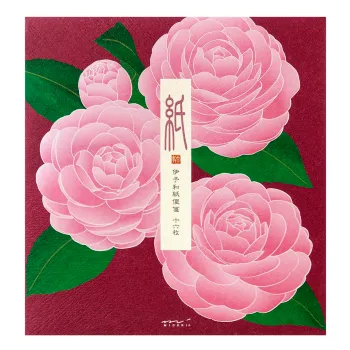
Midori letter pad made of traditional Iyo Washi Japanese paper, featuring soft pink Otome camellia flowers with a pearlescent foil finish. Includes 16 sheets and a lined guide sheet, ideal for elegant correspondence.
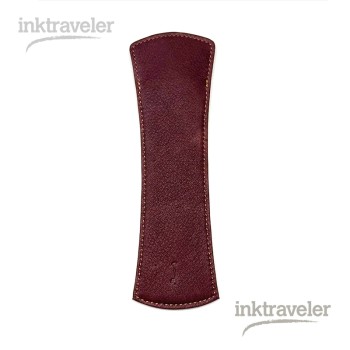
Kobe kip grade bordeaux leather Fountain pen sleeve with protective soft inner fabric.
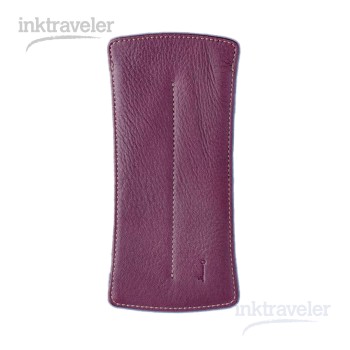
Kobe kip grade black leather Fountain pen sleeve with protective soft inner fabric for 2 fountain pens
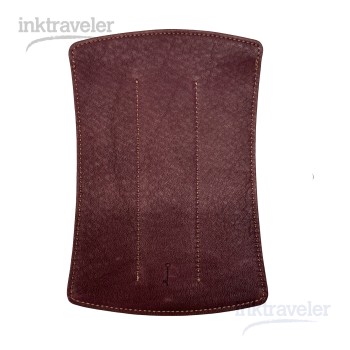
3 Fountain pens sleeve

Taccia Sunao-iro Momo Pink is a 40 ml Japanese fountain pen ink inspired by peach blossoms and the arrival of spring. Its bright pink tone belongs to the Sunao-iro collection, created to represent essential colours in their purest, most cheerful and natural form.

The Teranishi Guitar Light Blue Glass Dip Pen is a handmade glass pen for writing, drawing and sampling bottled inks. Every pen has its own unique pattern: the balance of light blue and gold-toned sparkle varies, with golden highlights more prominent in some pieces. Dip the grooved nib into ink and rinse it with water when changing colours. Photographs are illustrative: the pattern and balance of colours on your pen may differ from those shown.